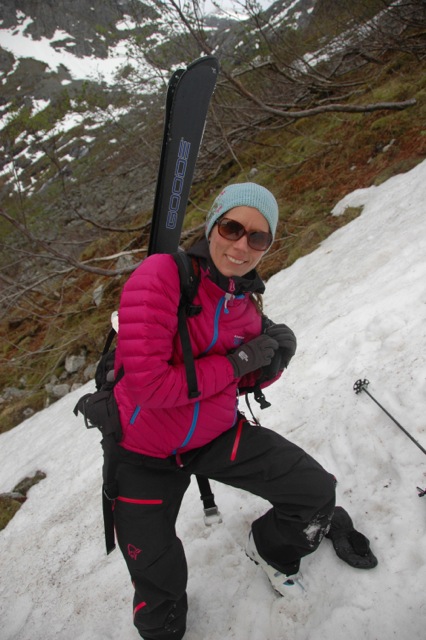
Anna Bågenholm was skiing in the mountains outside of Narvik, Norway in 1999 when she lost control of her skis and fell head first onto an ice-covered stream. The frozen water gave in and Bågenholm became trapped under a 20-centimeter thick layer of ice.
The two colleagues she was skiing with found her with only her feet above the ice. They made several attempts to free her to no avail. The duo desperately tried to contact rescue teams as they held Bågenholm’s skis so she wouldn’t submerge any further into the freezing water. Bågenholm managed to find an air pocket underneath the ice and stayed conscious for 40 minutes before circulatory arrest took over her body.
A rescue team eventually managed to cut a hole in the ice with a pointed gardening shovel and pulled her out. Bågenholm had been trapped for 80 minutes where her body temperature decreased to 13.7 ℃ (56.7 ℉), the lowest survived body temperatures ever recorded in a human with accidental hypothermia.
Anna Bågenholm was skiing in the mountains outside of Narvik, Norway in 1999 when she lost control of her skis and fell head first onto an ice-covered stream. The frozen water gave in and Bågenholm became trapped under a 20-centimeter thick layer of ice.
The two colleagues she was skiing with found her with only her feet above the ice. They made several attempts to free her to no avail. The duo desperately tried
to contact rescue teams as they held Bågenholm’s skis so she wouldn’t submerge any further into the freezing water. Bågenholm managed to find an air pocket underneath the ice and stayed conscious for 40 minutes before circulatory arrest took over her body.
A rescue team eventually managed to cut a hole in the ice with a pointed gardening shovel and pulled her out. Bågenholm had been trapped for 80 minutes where her body temperature decreased to 13.7 ℃ (56.7 ℉), the lowest survived body temperatures ever recorded in a human with accidental hypothermia.

 Share On Facebook